
Certified reference materials: the basis of every reliable analysis
What CRMs are, where they are used and how to choose the right ones for your instrument.
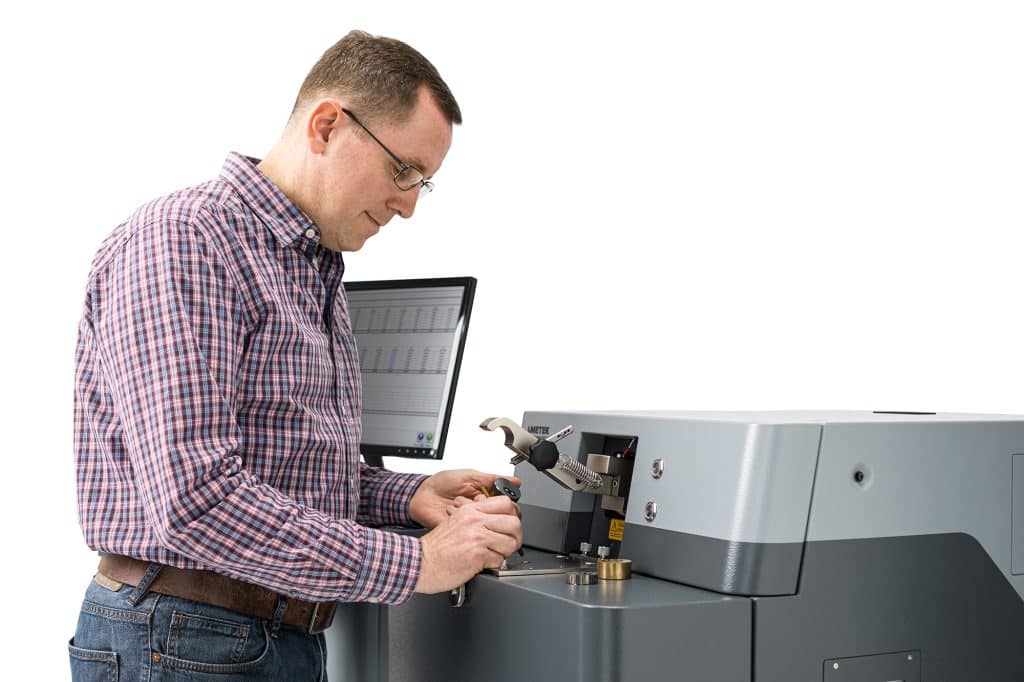
A spectrometer does not “know” the composition of a metal on its own. It finds it by comparing the signal of the unknown sample with samples of known composition. That is why the accuracy of every analysis depends, to a large extent, on the quality of the standards used.
What is a CRM
A certified reference material (CRM) is a homogeneous sample with a certified chemical composition. Its values result from analyses in many experienced laboratories, are accompanied by the uncertainty of each element and are given in an official certificate, with traceability to the International System of Units (SI).
Where they are used
- Calibration: creating or extending the instrument’s calibration curves for an alloy.
- Accuracy checks: periodic verification that the instrument gives correct results, before critical analyses or after maintenance.
- Method validation and accreditation: documenting the quality of measurements in audits and inspections, e.g. for laboratories accredited to ISO/IEC 17025.
CRMs, setting-up samples and control samples
In daily practice we come across three categories of samples that are often confused:
Setting-up samples: used to correct the instrument’s drift over time. They must be homogeneous and stable, but do not need certified values.
Control samples: the company’s own in-house samples of known composition, for quick daily checks.
CRM: the highest level, with a certificate and uncertainties. They are what gives your results traceability.
Why solid samples
Spark emission spectrometers and XRF analysers for metals measure solid samples directly. Solid CRMs come as discs or cylinders and their surface is prepared exactly like that of production samples. This way the standard and the unknown sample “look” the same to the instrument.
How to choose the right CRM
- The same alloy base as your samples (iron, aluminium, copper, nickel, etc.).
- Concentrations close to those you measure in practice, ideally slightly above and slightly below your specification limits.
- Suitable dimensions for your instrument’s sample stand.
- A reliable producer with a complete certificate.
The producers we work with
We supply solid certified reference materials, to order, from LGC, BAM, BAS and Suisse Technology Partners (formerly Alusuisse). Find out more on the page Certified Reference Materials.
