
Sample preparation: the step that decides the result
Practical guidance on correct grinding and milling before analysis with an emission spectrometer.
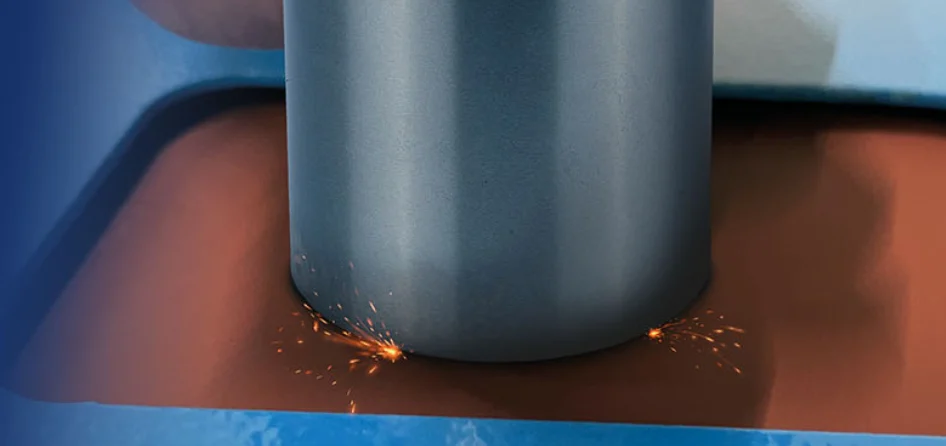
A spark emission spectrometer analyses only a thin layer of the sample surface. If this surface is not prepared correctly, the result will be wrong, however good the instrument. Preparation is not a detail: it is part of the analysis.
What preparation must achieve
- A flat surface, so that the sample seals well on the sample stand and no air enters the spark chamber.
- Clean, “fresh” metal, free of oxides, paint, coatings or surface decarburisation.
- Representative material, corresponding to the bulk of the sample and not just its outer layer.
- No contamination from the abrasive or from previous samples.
Grinding steel and cast iron
Ferrous samples are usually prepared by belt or disc grinding. The abrasive must suit the material and be changed regularly, because a worn abrasive “polishes” the surface instead of cutting it and overheats it.
For cast iron, to measure carbon correctly, the sample must have solidified white, by rapid cooling in a suitable mould. A grey sample with free graphite gives unreliable carbon results.
Milling aluminium, copper and soft alloys
Soft non-ferrous metals do not grind well: the material “smears” and can trap abrasive grains that contaminate the analysis. That is why aluminium, copper and their alloys are as a rule prepared by milling or turning.
The most common mistakes
- Using the same abrasive for different alloys, which carries elements over from one sample to another.
- Touching the prepared surface with your fingers, or cooling it with water or oil.
- Overheating the sample during grinding, which alters the surface.
- A long delay between preparation and measurement, allowing the surface to oxidise again.
- Samples too small or too thin for the sample stand.
The right equipment
FLUXANA grinding machines cover every need: from the automatic MBG01 with PLC control, to the MDG02 with two discs for parallel grinding and the benchtop MLG11. The MDE01 dust extraction system keeps the workplace clean and safe. See the whole range on the page Sample Preparation.
